 BuyBack HTB
Help to Buy Staircasing: Is Paying Off 10% Worth It?
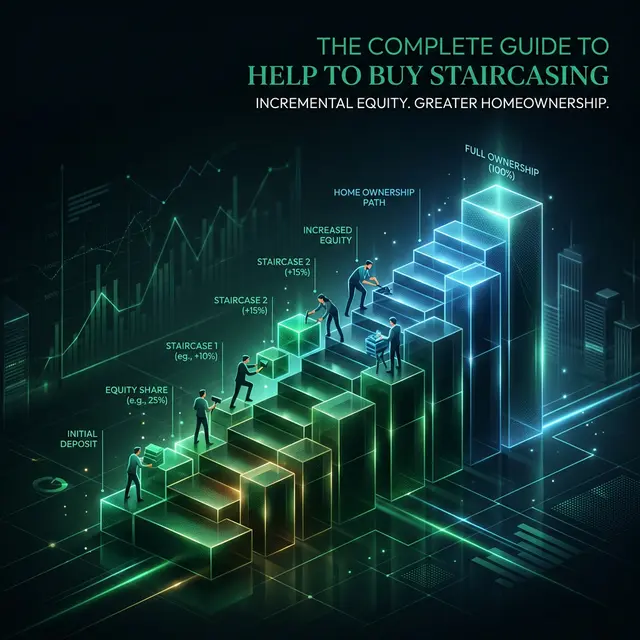
What is Help to Buy Staircasing?
If you reach the end of your 5-year interest-free period and cannot afford a "full redemption" (paying off the entire 20% equity loan), you are not stuck. The Help to Buy scheme allows you to "staircase"—meaning you can make part-repayments to reduce the government's share of your home.
Staircasing is positioned as a flexible way to gradually build your equity. However, before you start throwing your hard-earned savings at the loan, you need to understand the rigid rules and the substantial hidden costs involved in every single transaction.
The Rules of Part-Repayment
You cannot simply transfer £500 a month to Lenvi like you would overpay a standard mortgage. The rules are strict:
- Minimum Payment: Any staircasing payment must be a minimum of 10% of your property's current market value.
- Market Value, Not Original Price: If you bought a house for £200,000, 10% was £20,000. But if that house is now worth £250,000, your minimum staircasing payment is now £25,000.
Common Question
Can I pay off my Help to Buy loan in instalments?
Yes, through staircasing. But because the instalments must be at least 10% of the current market value (which requires tens of thousands of pounds each time), it is not a casual monthly commitment.
How Staircasing Affects Your Year 6 Interest
The primary benefit of staircasing is that it tackles the two biggest drains on your wealth: the monthly interest fee and the shadow cost of house price growth.
If you staircase from a 20% loan down to a 10% loan:
- Reduced Monthly Fees: The escalating interest rate (starting at 1.75%) is calculated against the remaining original principal. Therefore, paying off half your loan instantly halves your monthly interest bill.
- Reduced Shadow Cost: The government now only owns 10% of your home's future capital appreciation, rather than 20%. You get to keep more of your property's future growth.
The Hidden Costs of Staircasing
This is where the math gets ugly. Staircasing is not administratively free. Every time you make a part-repayment, you trigger a chain of mandatory professional fees.
For a single staircasing transaction, you will pay:
- Lenvi Admin Fee: £200 (mandatory fee to the scheme administrator).
- RICS Valuation Fee: £250 - £400 (you must prove the current market value to calculate the 10% chunk).
- Solicitor Fees: £300 - £600 (a solicitor must legally alter the charge on your property deeds).
That means every time you staircase, you are burning roughly £750 to £1,200 in dead money on fees.
Common Question
Do I need a solicitor to staircase Help to Buy?
Yes. Because the government is releasing part of their legal charge over your property, the Land Registry records must be officially updated by a qualified conveyancer.
Is Staircasing Worth It?
Given the high transaction costs, making multiple small staircasing payments is highly financially inefficient. If you do it three times over ten years, you could waste over £3,000 in fees alone.
The Verdict: Staircasing is generally only worth it if:
- You have a lump sum of cash (or equity) right now, but definitely cannot stretch to a full 20% buyout.
- You expect your property to dramatically increase in value in the near future, making it vital to reduce the government's share before the price jumps.
- You plan to make just one part-repayment now, and then do a final full redemption when you eventually sell or remortgage later.
Before proceeding, use the BuyBack HTB Calculator. Model a partial repayment vs. keeping the full loan to see exactly how much interest and equity you save—and whether it justifies the £1,000 upfront hit in administrative fees.
Ready to find out exactly when to remortgage?
Use our data-driven calculator to project your Help to Buy costs and discover your personal Crossover Point.
Calculate My Break-Even Date Now